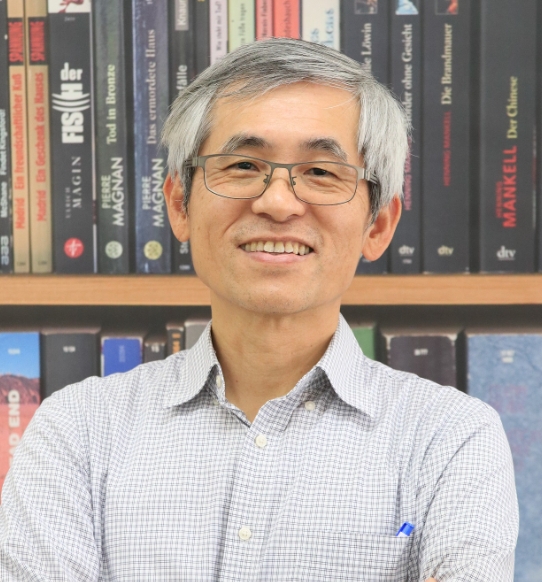
Prof. James Kwok, IEEE Fellow Prof. Kwok is a Professor in the Department of Computer Science and Engineering, Hong Kong University of Science and Technology. Prof. Kwok served / is serving as an Associate Editor for the IEEE Transactions on Neural Networks and Learning Systems, Neurocomputing, Artificial Intelligence Journal, International Journal of Data Science and Analytics, and Action Editor of Machine Learning. He is also serving as Senior Area Chairs of major machine learning / AI conferences including NeurIPS, ICML and ICLR. He is recognized as the Most Influential Scholar Award Honorable Mention for "outstanding and vibrant contributions to the field of AAAI/IJCAI between 2009 and 2019". He is an IEEE Fellow, and the IJCAI-2025 Program Chair. Speech Title: Multi-Objective Deep LearningMulti-objective optimization (MOO) aims to optimize multiple conflicting objectives simultaneously and is becoming increasingly important in deep learning. However, traditional MOO methods face significant challenges due to the non-convexity and high dimensionality of modern deep neural networks, making effective MOO in deep learning a complex endeavor. |
|
Prof. Yin-Tien Wang Professor Yin-Tien Wang received the B.S. degree from Tamkang University (TKU), New Taipei City, Taiwan, in 1983, the M.S. degree from the Stevens Institute of Technology, Hoboken, NJ, USA, in 1988, and the Ph.D. degree from the University of Pennsylvania, Philadelphia, PA, USA, in 1992, all in mechanical engineering. He joined the Department of Mechanical and Electro-Mechanical Engineering, TKU, as an Associate Professor, in 1992, and was appointed as Full Professor in 2013. He served as the Chairperson of the Department of Mechanical and Electro-Mechanical Engineering, TKU, from 2016 to 2020, where he is currently a Professor and the Chairperson of the Department of Artificial Intelligence, and also in charge of robotics and machine vision courses. His current interests include computer vision research and the transference of this technology to robotic and nonrobotic application domains. Speech Title: Mitigating Catastrophic Forgetting via Brain-Inspired Gating and ConsolidationDeep neural networks suffer from catastrophic forgetting in continual learning, as training on new tasks often overwrites previously learned knowledge. Retraining from scratch with all past data is a common solution, but it is costly and often infeasible due to storage, privacy, and operational constraints. Continual learning therefore seeks incremental model updates that preserve prior knowledge under limited resources. In this talk, we present a brain-inspired continual learning framework that mitigates catastrophic forgetting. Inspired by complementary learning systems (CLS), our method enables lifelong learning without replaying past data. The framework uses hippocampal-style, input-driven gating for dynamic routing. We introduce geometric resonance for vision and semantic interactive resonance for sequence modeling to generate spatially selective gating signals that regulate information flow and activate task-relevant neurons. We further translate synaptic tagging and capture (STC) into a novelty-driven, prediction-error-based consolidation process that protects critical memory traces while maintaining synaptic plasticity. Experiments show reduced replay-free forgetting and a strong stability-plasticity trade-off. Using sparse computation in spiking neural networks (SNNs), the framework also achieves significant inference energy savings with competitive performance. |
Prof. Weinan Gao Weinan Gao received the Ph.D. degree in Electrical Engineering from New York University, Brooklyn, NY, USA. He is a Professor with the State Key Laboratory of Synthetical Automation for Process Industries at Northeastern University, Shenyang, China. Previously, he was an Assistant Professor of Mechanical and Civil Engineering at Florida Institute of Technology, Melbourne, FL, USA, an Assistant Professor of Electrical and Computer Engineering at Georgia Southern University, Statesboro, GA, USA, and a Visiting Professor of Mitsubishi Electric Research Laboratory (MERL), Cambridge, MA, USA. His research interests include reinforcement learning, adaptive dynamic programming (ADP), optimal control, cooperative adaptive cruise control (CACC), intelligent transportation systems, sampled-data control systems, and output regulation theory. Prof. Gao is the recipient of the best paper award in IEEE Data Driven Control and Learning Systems (DDCLS) Conference in 2023, IEEE International Conference on Real-time Computing and Robotics (RCAR) in 2018 and the David Goodman Research Award at New York University in 2019. He is an Associate Editor of IEEE Transactions on Neural Networks and Learning Systems, IEEE/CAA Journal of Automatica Sinica, Control Engineering Practice, Neurocomputing and IEEE Transactions on Circuits and Systems II: Express Briefs, a member of Editorial Board of Neural Computing and Applications, and a Technical Committee member in IEEE Control Systems Society on Nonlinear Systems and Control, IFAC TC 1.2 Adaptive and Learning Systems, and CAAI Industrial Artificial Intelligence. Speech Title: Learning-based Output Regulation: Theory and ApplicationsOutput regulation is a fundamental mathematical framework for designing controllers capable of asymptotic tracking and disturbance rejection. Meanwhile, reinforcement learning focuses on minimizing cumulative cost through an agent's interaction with an uncertain environment. Bridging these two fields, adaptive dynamic programming serves as a data-driven, model-free approach to adaptive optimal control. In this talk, I will explore how to use adaptive dynamic programming as a tool to tackle learning-based output regulation problems across both linear and nonlinear systems from both theoretical and practical perspectives. |
|
Assoc. Prof. Shuang Du Shuang Du, a native of Sichuan, China, was born in 1983. He completed his undergraduate studies in Electronic Engineering at Beijing University of Posts and Telecommunications (BUPT) in 2005. He then pursued graduate education at the University of Calgary, Canada, receiving his M.Sc. in 2010 and his Ph.D. in 2015, both in Geomatics Engineering. Dr. Du embarked on his professional career at the University of Electronic Science and Technology of China (UESTC) in 2015, and he is serving as an associate professor at the School of Aeronautics and Astronautics. He is also recognized as an expert committee member of both the China BeiDou Open Laboratory and the Sichuan Provincial Department of Science and Technology. His primary research and teaching activities focus on autonomous navigation and route planning for unmanned systems, as well as the field of embodied intelligent robots. Speech Title: MAPSE: A Decoupled Planning and Execution Framework for Robust Vision-Language-Action RobotsVision-Language-Action (VLA) models show great promise for multi-task robotic manipulation, but their real-world deployment is hindered by limited out-of-distribution (OOD) robustness, a lack of hierarchical task decomposition for long-horizon reasoning, and insufficient fault tolerance. To address these challenges, this paper proposes MAPSE, a decoupled planning-execution framework designed to achieve modular generalizability and execution recoverability. At the planning level, MAPSE utilizes a multimodal episodic memory hub, employing a Pareto multi-objective retrieval mechanism and task skeleton re-ranking to ensure candidate diversity and structural alignment. Furthermore, an adaptive threshold-gated strategy dynamically balances efficiency and generalization by toggling between semantic mapping transfer and retrieval-augmented MLLM planning. For robust execution, any VLA policy can be integrated as a plug-and-play action expert, monitored by a SAFE-driven closed-loop failure detection mechanism at the sub-task level. Upon identifying a failure trend, a spatial-aware MLLM synthesizes geometric correction prompts to trigger targeted recovery trajectories. Crucially, to prevent control stagnation during MLLM inference, we introduce a latency aware asynchronous parallel recovery mechanism. Extensive evaluations demonstrate that MAPSE significantly improves both the success rate and closed-loop robustness of existing VLA policies. Notably, our framework achieves state-of-theart mean success rates of 97.9% on the LIBERO simulation benchmark and 79.7% on SimplerEnv-WidowX, alongside superior continuous performance in complex, multi-stage real-world manipulation tasks. |